They shared it with me, and I don’t feel it’s right to keep it to myself.
Who gave it to me, you ask.
The fairies, of course.
* * *
Deep in the hollow
Of an ancient wood
Mystical lanterns
At one time stood.
HOME
* * *
This road you’re on
Does it ever end?
These twists and turns
Each hidden bend
What made you walk
The path you took?
Was it fairy love
Or love forsook?
THE ROAD
* * *
The fairy glade is where you’re at
Where dreams are made in a great big vat,
And in this land you’ll never find
A grain of sand left out of time.
DARE TO DREAM
* * *
Don’t you wake by bird’s light song?
But all is dead in winter’s frost.
Can life begin at journeys end?
Or is snow the mark that all is lost?
WINTER
* * *
Hush of night
‘Neath a violet sky
Moonlit waves
Have sung goodbye.
FAREWELL TO THE SEA
* * *
On the isle of wonder
Where enchantment reigns
Where walls fall asunder
And set free their chains
Give worry to the sea
And stress to the winds
For on the isle on wonder
Your adventure begins.”
THE ISLE
* * *
The passage of time
A mysterious thing
When you hear the bells chime
Then you must leave the ring.
Be warned.
Me: I can totally finish editing this book by tonight!
*Glances down at page bar. Pages read out of total page count – 53/147.*
Also me: I’m never going to finish…
A WORD ON EDITING
Editing is when a writer becomes inundated with her own work. The read-through, rereading, excessive reading, looking-up/looking-back/looking-through, not to mention shipping it off to an editor who will instruct you to go through his edits carefully, after which you really should follow up with a polish read, then send off to a beta reader (or two or three – not all at once, mind you. You really should only send to one beta at a time in order to keep all edits concise.) Once they’re through, you’ll find yourself going over their edits, which means more reading.
Does it ever end?
This part can be discouraging for writers. It’s a well-known truth that too much of a good thing can be a bad thing. You might find yourself getting bored with your own work. Certain scenes may sound useless and trivial. The ending might feel muddled, confusing, or just plain bad. It’s tempting to give up sometimes. But sometimes, this is where the rubber meets the road and you’re faced with the awe-inspiring realization that you have created something spectacular.
This is the moment every writer lives for. Acknowledgment for oneself that the work is indeed good. You might think the “moment every writer lives for” is when readers first get their hands on a copy of the book, but I say that’s an inaccurate statement. In order to believe what others might say about us, we must first believe it for ourselves.
A hundred people can call you pretty/handsome, but until you look in the mirror and believe it for yourself, those compliments fall on deaf ears.
Your parents may call you brave and stalwart, but until you face down your own fears and see the hero within, you will simply think “they’re being nice.”
A teacher might say that you’re intelligent, creative, but until you review the work of your hands and see the product for what it is – intelligent, creative – you will say, “They’re just trying to be encouraging. They don’t believe it.”
Believe in yourself.
Because this book I’m working on is the sequel in a two-part series, I reread the first book to refresh my memory on the characters and working of the plot. It has been perhaps two years since I published the first book, so I was pleasantly surprised by how much I had forgotten. It took me three days to read it.
Maybe that’s a small book. Or maybe I simply couldn’t put it down.
Arrogant? I think not. There’s nothing wrong with getting excited about your own work. If you don’t, no one else will. There’s a difference between bragging excessively and wanting to share something you are passionate about.
Forgetting and rereading the first book cemented in my mind that, yes, I had created something spectacular. You see, after publication, I revert to this overwhelming phobia that my work wasn’t polished up to par, or that I didn’t describe the world well. Sometimes I fret that the characters aren’t true to themselves, or that readers will discover all my plot holes. I became paranoid. My work wasn’t good. My writing was terrible. Now everyone will see it.
(Admittedly I would like to polish up the first book more, just because I’ve learned so much about editing in the past two years, and I would like to fix the esthetic appeal of the read.)
In my rediscovery, I found the story flowed exceedingly well. I was impressed with my own characters. I cheered for their growth and successes. My heart began to pound everytime they encountered danger, and the horror of the cliffhanger left my palms sweaty and my hands shaking.
This was everything I dreamed it would be.
Now I’m 53 pages into the second installment. I have been meticulously editing, molding, and reshaping the words so that they are their clearest, so that they speak their best, describe their best, and read their easiest. I have been merciless, cutting out anything that detracts from the story. And the most surprising realization is that there is no pain in editing.
People like to say that editing feels like your heart being torn out, but I’ve never experienced that – thank the Maker. My purpose in writing is to tell a story and introduce these characters – these delightful little people I’ve imagined – to the world. I want them to look their best, so I wipe off their smudges, scrub the dirt off them, polish and shine them, and proudly look on as they make their way across the stage.
Editing should not be all painful.
Editing should be the proudest moments of your project. When you can honestly look down at the work and say, “Yeah. This is really good. And it can be better.”
I want to encourage you – whatever you’re working on – that this can be an exciting and rewarding time. If you enter the editing mode with grudging and fear, you will experience grudging and fear. But if you enter with positivity, excitement, and hope, then you will experience those feelings instead.
I don’t care that my stories or even my characters may not seem realistic all the time. I write the kind of stories I want to read, and so should you.
How often have we heard that encouragement? “Write for yourself! You’ll find readers who enjoy your work as much as you do!” But how often are we hounded by the same gurus telling us we need realistic, heart-felt, raw characters, we need ordinary, everyday issues about life and personhood addressed and resolved, we should write about current events so readers will gravitate to our work?
I struggle with this idealism to make my characters real in a real way, and yet molding them into the heroes and heroines I need to propel the plot forward. Sometimes I write characters who are bolder than I feel. Some of them are shy and morose like me. I’ve been blamed for making shallow main characters who are only moved by supporting characters. Maybe sometimes I feel shallow and can only be moved by people around me. But on the flip side, I’ve also been accused of writing unrealistically brash characters who jump into action without thinking!
There’s no placating people. Everyone has an opinion, and someone will always tell you to do the exact opposite of what you are currently doing.
So, here’s my question: What’s your opinion?
Sometimes we have to refocus ourselves to the reason we write. I’ve been writing for so long, I don’t remember not being a writer. Before I started publishing, before I even shared my work, I literally only wrote for my sister – and maybe one or two supportive friends. I also wrote…for me. I loved my stories. When I get an idea in my head, it’s so exciting. I love the thrill of adventure! I love writing about young girls who get the chance to experience magic, who talk to fairies, who aren’t bound by family but go off willy-nilly without repercussions, scoldings, or groundings. I write to free my mind from my body, and I write to satisfy these urges to hop on a plane to who-knows-where and just escape!
In reality, I really don’t want to run away from home. Yes, I want to explore this world, but that’s not financially realistic – yet. Besides, I love my home. I love my stupid town. I love all the stupid people who populate it, the just and the unjust alike. I just want to experience adventure in a safe way.
And what better way to – safely – experience it than through a good book?
If I never publish another book, it won’t break my heart. I will continue to populate my personal bookshelves with my stories, and if that sounds narcissistic to you, then YES. YES IT IS.
Here is the only time I will tell you to fully embrace narcissism. Nobody is going to love your stories as much as you do. You will never have enough fans, enough adoring Tweets and Facebook messages to compete with the love you have for your own book. And you know why that is? Because you birthed the darn screaming, pooping, puking, colicky thing. You stayed up late and woke up early. You beat your head against walls and computer desks. You were stumped by its rebellion, but you overcame its temper tantrums. You pointed a finger at the notebook or computer screen and shouted, “You’re going to behave, grow up, and become a decent book, so help me God!”
Good parents will always tell you no one will love your child more than you will. It’s the same for books. No one will understand why you put so much patience and time into a few stupid words. Some will even tell you to trash something if it’s just being too difficult.
Well, that’s not what we do around here, is it? No, sir. You pick up that sniveling, snot-faced, puffy-eyed story, wipe away its pathetic tears, give it a few pats on the butt and tell it to go play on the swingset. This is your book. And this is my book.
So let’s write like we don’t give two fudgesicles about the world and its problems.
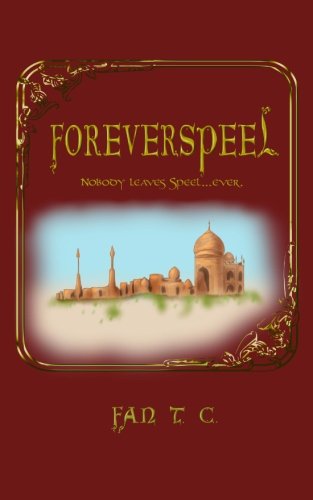
Well, folks, that’s that. The Goodreads free book giveaway has just concluded, and the lucky books are now in the mail and on their way to their new owners! Congratulations to Harold, of Canada; Robyn, of Great Britain; and Gary, of our very own USA. Happy reading, and dream big!
Listen. People need books. Grandparents need books. Moms need books. Dads need books. Teenagers and teenie-boppers and tweens and little ones and toddlers and babies need books.
Why?
Because books are education. Books are science. Books are magic. And books are dreams.
Think about it.
It’s very simple, really. You’re reading this blog post. You had to learn reading from somewhere. You may have struggled with it at one time, but I’ll bet you actually enjoy reading. It is still one of the most important skills of any human being. It is the foundation on which we learn, and if our children want to achieve anything, reading will help them.
Promote reading. Promote books. Teach your children.
 Written Things