Books and Affiliated

We’re Here! Ep 2

Villains
In another installment of We’re Here! Ep 2: Key elements to writing a really good villain.

I present to you Medusa – that vile, nasty woman we all loved to hate. She was ugly. She turned men to stone. She was bitter, angry, and mean. We were relieved when Perseus outwitted and destroyed her. You might even say we stopped viewing her as a woman at all, but a monster like the ones we hide from around Halloween time.

This article from the UK I stumbled upon presented something I never knew about the story of Medusa. It gave, for the first time, her backstory. You can read it here. I would like to unpack some of the article in a short blog for you busy readers, if I may, and present my humble thoughts.

Medusa is a great villain. But she’s not great for the chaos and fear she wreaks upon her world. She’s a great villain for her pain.

We all sense great villains are born of great pain. We can tell when someone is evil for the sake of being evil (which is kind of boring) or when someone is evil because they were pushed, chased, and beaten down the wrong path. They are evil, but they don’t like it. They’re simply too broken and too disillusioned to humanity that there’s no turning back.

Medusa was a beautiful woman. So beautiful, in fact, she captured the eye of the sea god himself – Poseidon. But the feeling wasn’t mutual. She did not love Poseidon. Truth be told, she could have been married to someone else for all we know of her story. But Poseidon being the selfish man he is, chases her. He pursues her, it is said, across Athens which is governed by the goddess of war Athena. Medusa is fleeing for her life. Poseidon leaves destruction in his wake in his pursuit of her.

And really, let’s ask ourselves why? There are literally millions of beautiful women, dude. Find one who’s a better match for you.

Athena, understandably, resents her country getting destroyed all for the sake of her uncle’s lust of some pretty human, so she stops him, scolds him, and sends him back to the sea lest he risk all out war with his niece.

Oh wait. That doesn’t happen. What really happened, was Athen turned a blind eye to her uncle’s scandalous affair, and punishes the victim of this narrative. Medusa. She curses Medusa to never “seduce” another man. But that’s not enough. Athena turns her into a monster.

And Perseus is gloriously applauded for killing her.

This is a great villain story. A good thing turned rotten by injustice. And we believe every bit of Medusa’s anger, bitterness, and hatred of men. Within her story, the readers can commiserate her point of view, if not condoning her actions. Yes, she’s cursed, but no, she shouldn’t have been running around trying to turn men to stone. Those men, in the beginning, were as innocent as she once was. But, alas, without her villainy, we don’t have our hero, and without a hero, where’s the story?

Remember, sometimes the best villain is a believable villain. And sometimes giving your readers a glimpse of the whole story paints a compelling picture.

This has been,

Fanny T. Crispin

Books and Affiliated, From Writing to Publishing

I Did a Thing

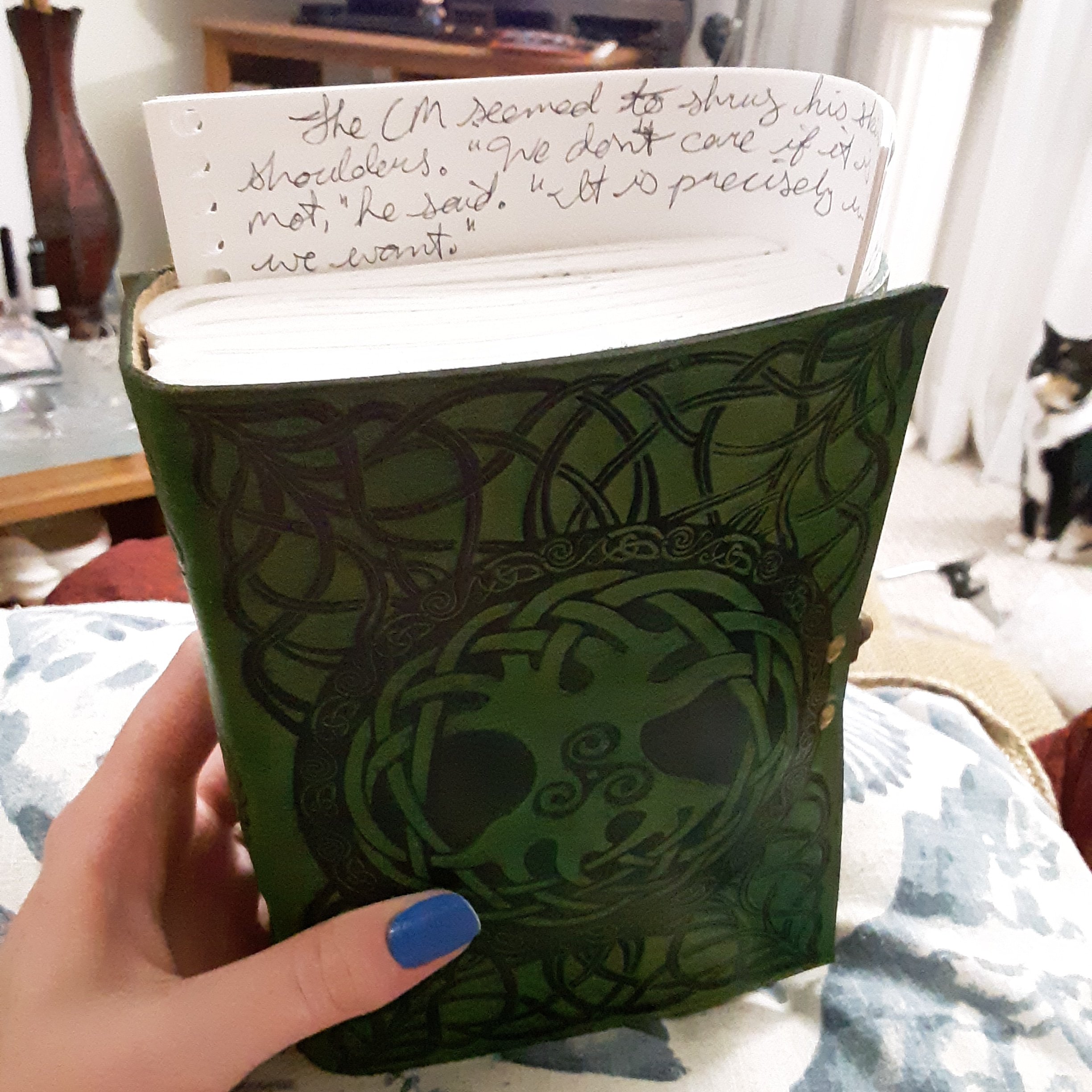
I finished my book! I had to supplement a few pages near the end.

The urge is to dive right into the next project because I’m motivated and pumped with words. But this is actually a very good time to take a break. My mindset is in juvenile fiction, and my next project might be a vampire murder mystery. Those two don’t jive. It’s good to clear your head after a project.


This is a handmade leather journal from Poetic Earth. They usually frequent the Bristol Renaissance Faire I attend during the summer, but with Covid shutting everything down, they have closed the gates. I’m crushed, but I will go on. Writing in this journal gave me a sense of nostalgia for the musty, ancient dwelling of the book binders at Bristol. I am very excited to go back and purchase another journal.


This has been,

FanTC

Books and Affiliated, From Writing to Publishing

Rebellious Characters

She was meant to be a traitor.

Turns out, she had other plans.


Sometimes when you’re dreaming up a story, you create plots for the characters and begin casting players for the role. You’re pretty clever and rather pleased with yourself. You think you’ve got it all figured out. But then you begin writing the thing…

It’s interesting how a character will start to steer its own course. You realize you really have no control over the matter, and are resigned to figuring out the character’s purpose now that it has taken a complete about-face.

What we discovered during these moments is a truer spirit with the character we’ve created. They were never meant for the role we’ve assigned them, and they have taken it upon themselves to tell us so. Now we must take greater care discovering their new role so we don’t botch it up.

Perhaps the most extreme case of this I have experienced (because I’m a pretty good judge of character) is the Madam Raven. She was meant to be a traitor. She was quite vile and vicious. But just as I was leading up to the glorious moment, she paused on stage – mid sentence – and her red lips did that thing they do when she’s displeased.

“No,” she said quite plainly. “That’s not how it goes at all.”

And that, my friends, is the God’s-Honest-Truth.

This has been,

FanTC

Books and Affiliated

Little Things

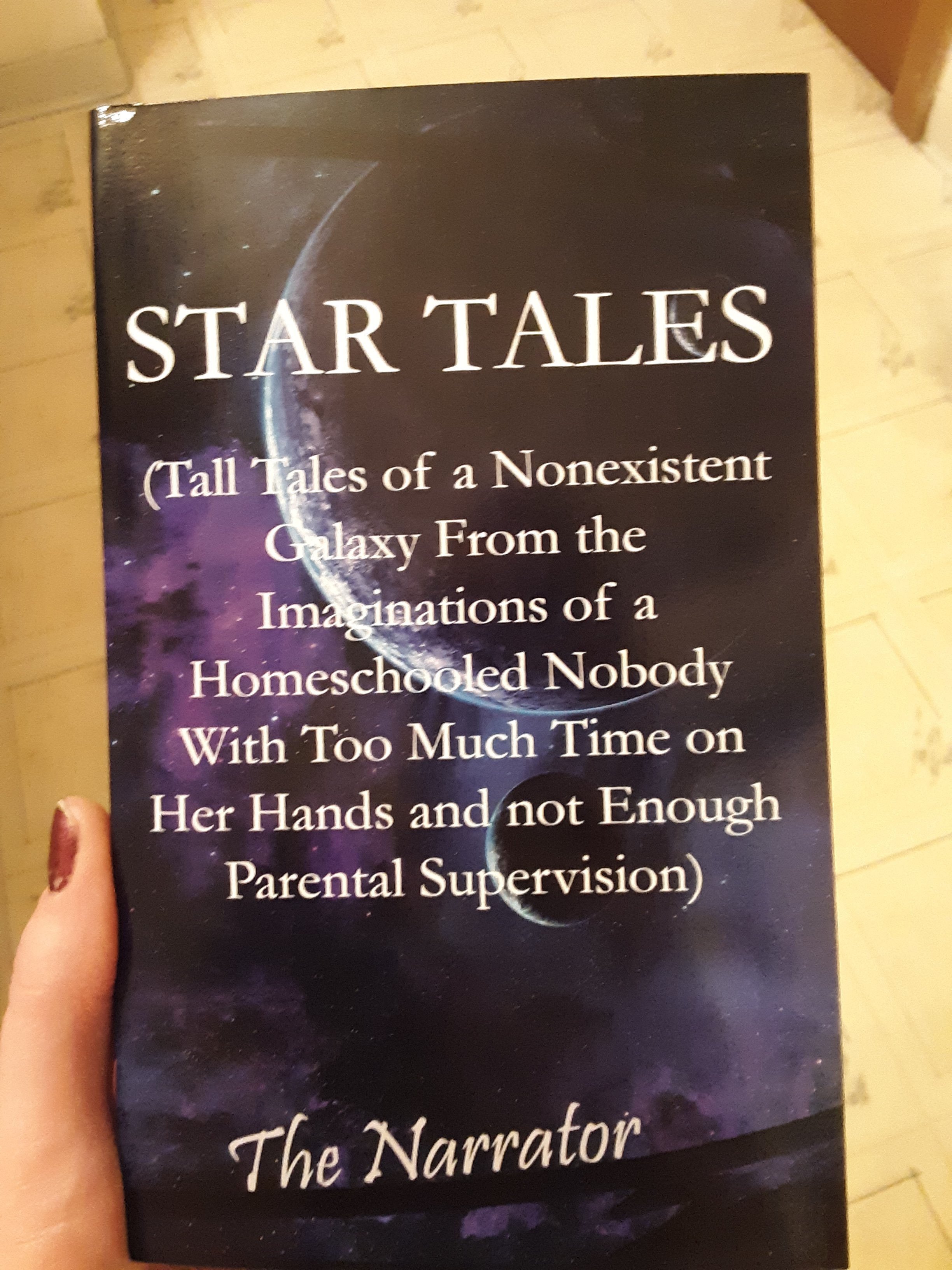
When your sister is a writer too, and creates a book tailored just for you. 💙


Self-publishing has opened up all sorts of possibilities for making a written dream come true. You don’t have to wait terribly long to own a printed copy of your story. You just have to put a little work and become a little computer savvy.

I’m going to enjoy every minute of this adventure. It’s written by one of my favorite author’s, so it’s sure to be a top chart hit.

This has been,

Fanny T. Crispin

Books and Affiliated, From Writing to Publishing

Editing

Do you know, I’ve been writing for 13 years and still struggle with passive voice? It’s a dilemma for many writers. You shouldn’t feel down and out of you get feedback on it.

This is where editing comes in to play. Editing really is a lot more fun than people give it credit. A writer can finally come back to her work and read it almost as if for the first time. She might have been a speed writing demon for months and forgot half of the punch lines she worked in. Suddenly stumbling on them again, she realizes they were pure magic.

Editing can be fun. I thoroughly enjoy the process of tweaking, fixing, and rearranging my books. At first, it used to hurt if I had to delete whole scenes – some I dearly treasured. But after a few years, you come to realize the story is too important to allow a few fun scenes drag it down.

Editing gives me a chance to really hone in on my characters. I want their actions to make sense, and I want their personalities to feel real. It gives me time to get to know them. I’m forced to stop and think and evaluate whether a word or a deed fits with the overarching makeup of the plot. It’s also fun just to spend time with them – some of whom I love, some I love to hate.

Editing provides the experience of viewing the book as a whole. When you’re writing, it tends to come in leaps and bounds, jumping from one scene to the next. With editing, you can smooth out those transitions to make them seamless. It really is a wonderful step in the creative process, and the better you can edit yourself, the less others will edit over you. That’s not a promise, but it’s a pretty good assumption.

Be an editor. It’s rewarding.

This has been,

Fanny T. Crispin